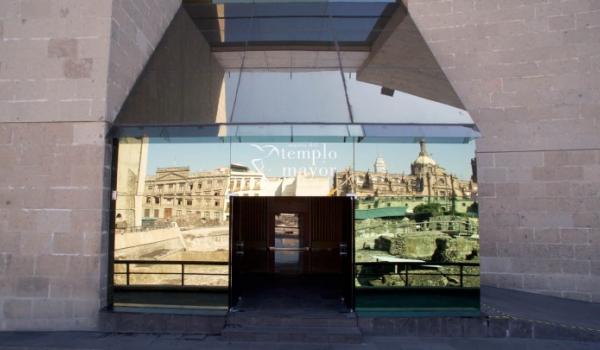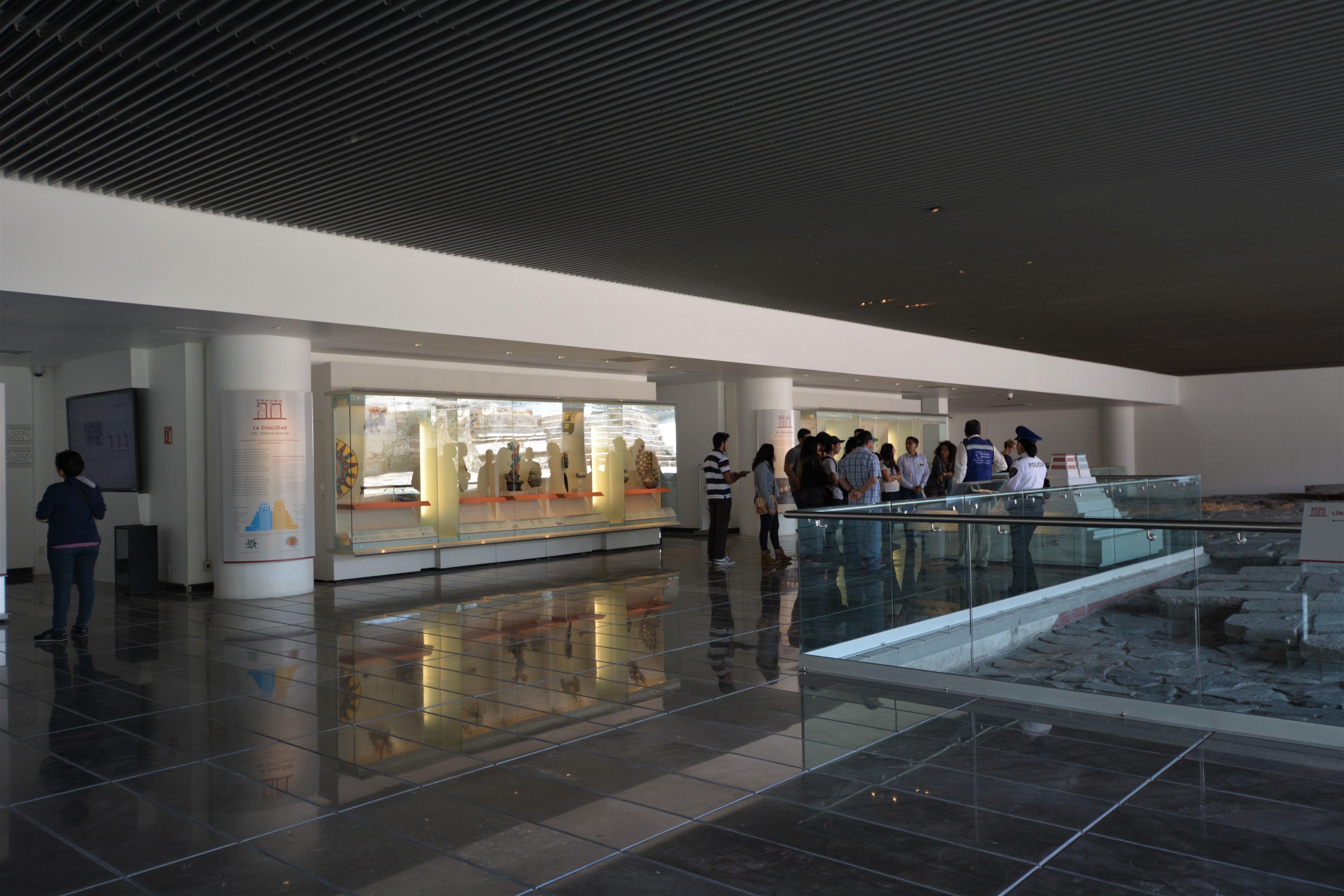












Vestíbulo de acceso a la zona arqueológica del Templo Mayor
Vestíbulo de acceso a la zona arqueológica del Templo Mayor
Models and sacred structures such as a tree and a Cuauhxicalco are now open to the public thanks to recent discoveries and the ongoing work of the Urban Archaeology Project (PAU).
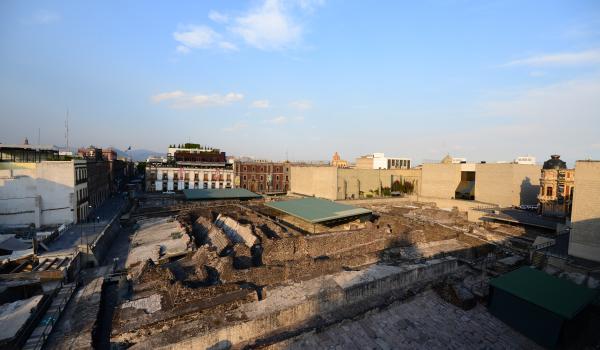
The INAH has opened a new entrance to the Templo Mayor Archaeological Zone from Plaza Seminario, where visitors can explore an underground archaeological and museum space running north-south, measuring 50 m long by 24 m wide and varying in depth between 5 and 7 m, where they can see the remains of a floor made of large slabs of pink andesite known as lamprobolite, which forms part of a large plaza surrounding the Templo Mayor, built during the reign of Ahuitzol (1482-1502).
Beneath this floor, the remains of an older floor can be seen, made of small basalt slabs that form part of a lower level of the plaza, dating from stage IVb (1469-1481), the period corresponding to the reign of the tlatoani Axayácatl.
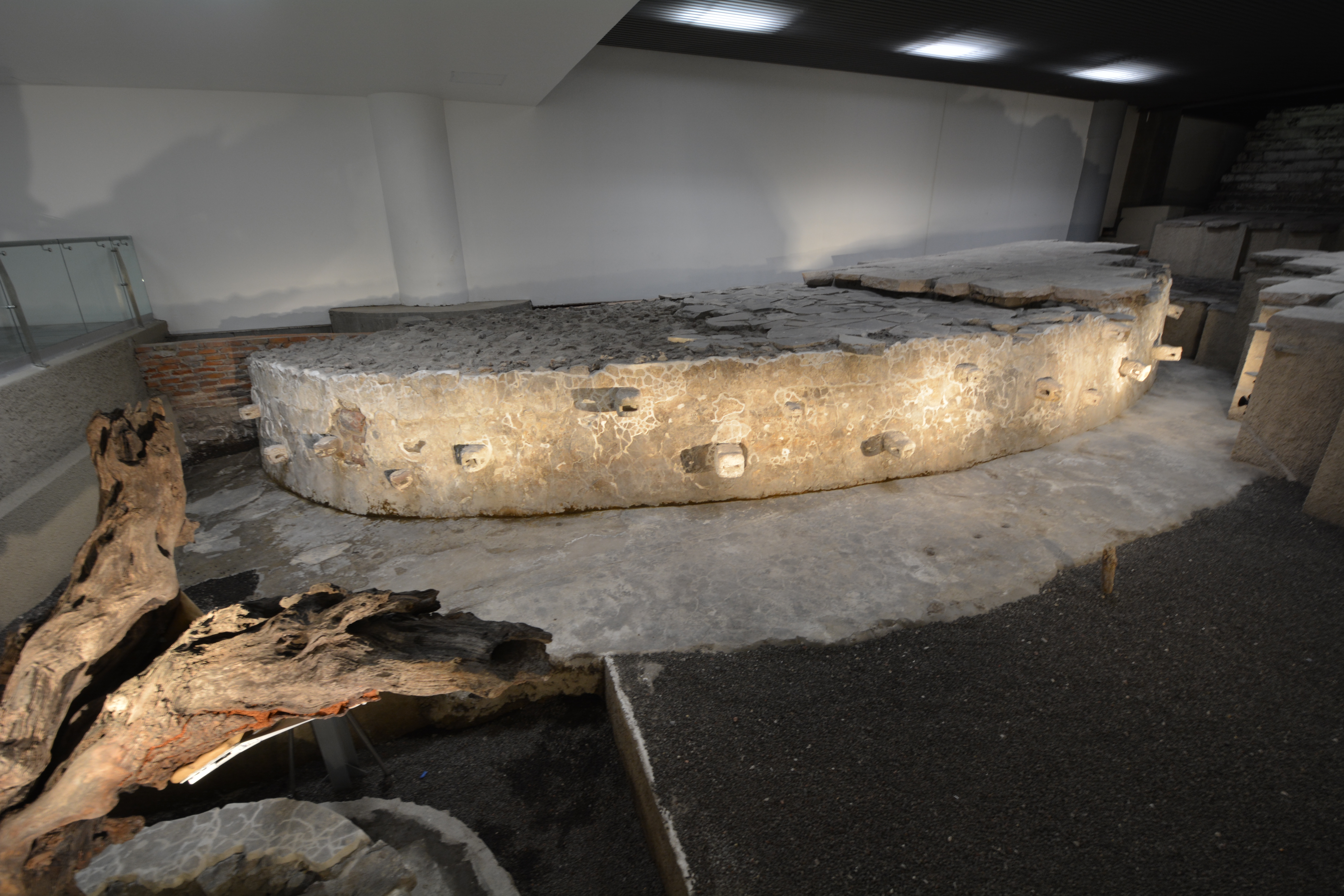
At the back of the space, on a lower level, there is a section of the Cuauhxicalco “Eagle vessel or container,” consisting of a circular platform measuring almost 17 m in diameter and 2.50 m in height. This structure was depicted in the Codex Matritense del Real Palacio, which states that it was a low building, probably because it was used for various religious ceremonies related to fire and it was intended that those attending should have close contact with the priests. The wall that gives it its shape was built with a slight slope using tezontle and andesite stones joined with mud, covered with stucco and decorated with sculptures in the shape of snake heads in the form of spikes that were embedded alternately. This is one of the five Cuauhxicalcos that existed in Tenochtitlan and dates back to stage IV of the Templo Mayor, which corresponds to the reign of Moctezuma Ilhuicamina, who ruled between 1440 and 1469.
To the west, you can see the remains of a staircase that was mostly destroyed during the construction, along Guatemala Street, of a sewage collector for the sanitation of the city center during the government of Porfirio Díaz in the early 20th century.
Less than 3 m from Cuauhxicalco, the remains of one of the sacred trees are on display. According to the Mexica worldview, these trees supported the thirteen upper levels and guided the cosmos; through their trunks, the world received the beneficial and harmful influences of the upper and lower worlds. This dead oak trunk has a circular wall at its base made of tezontle stones joined with mud and covered with stucco. It is 2.20 m in diameter and 55 cm high. The trunk is divided into two arms, which may have been done intentionally.
Two large display cases attached to the west wall of the vestibule contain exceptional archaeological pieces: one display case represents duality with pieces associated with the Templo Mayor (Tláloc and Huitzilopochtli), which were recovered between 1978 and 1982; the other is dedicated to the Urban Archaeology Program (PAU) and includes a representative sample of offerings, stone sculptures, Aztec ceramics, lithics, and ceramics from the viceregal period, the result of excavations in the new lobby leading to the archaeological zone.
This space includes a model of the Templo Mayor and a video that provide a better understanding of the seven stages of construction of the ruins that can be seen when visiting the archaeological site.
Upon leaving the lobby, there are three models from the INAH. The first illustrates the physiographic features of the lake area of the Mexico Basin and the human settlements that existed in the first half of the 16th century. The second shows the cities of Tenochtitlan and Tlatelolco with their structures, neighborhoods, chinampas, and causeways. The last one is of the sacred precinct of Tenochtitlan, updated with the findings of the PAU.
Source: Raúl Barrera Rodríguez, director of the Urban Archaeology Program